
The benefit metrics gap
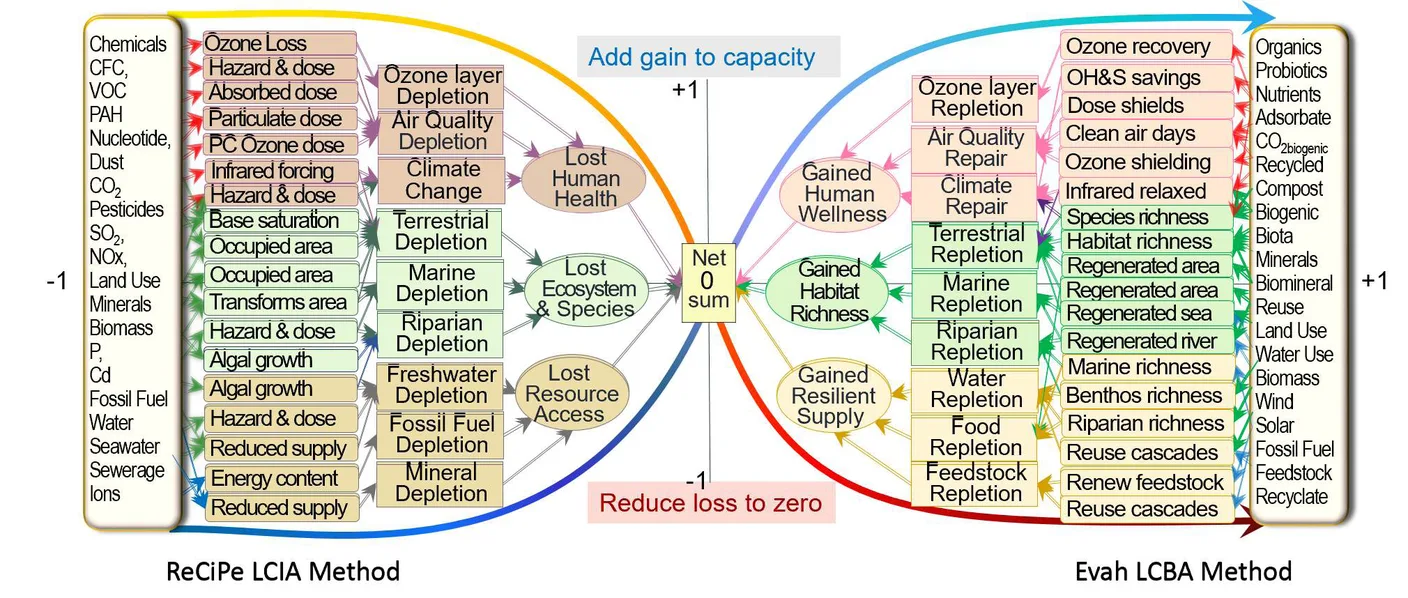
Nature Positive Initiative, ISSB, TNFD, WBCSD, GRI and other organisations that promote and use nature metrics would appear to focus wholly on measuring the health of nature on land that is directly accessible and measurable. The metrics used are effective, but difficult if not impossible to incorporate into product-level assessments that involve deep, complex supply chains and require generalisation. The market currently measures the impacts of products using life cycle impact analysis (LCIA or LCA).
As markets transition toward circular, bio-based and engineered nature-based products, a critical challenge remains: conventional LCA is highly effective at measuring impacts, but rarely capable of identifying and quantifying the benefits created by products that actively restore ecosystems, sequester carbon, regenerate resources, improve human health outcomes, or avoid future environmental damage. This is the benefit metrics gap in product-level assessments. Given that approximately 70–80% of a building's nature impacts are embodied in the products and materials, the criticality of this issue in the construction sector alone is paramount.
Extending assessment beyond less harm
The Evah Institute's Life Cycle Benefits Assessment (LCBA) addresses this gap by extending product assessment beyond "less and zero harm" to measurable positive outcomes. LCBA enables the quantification of benefits across four key domains: ecosystem and biodiversity regeneration, human health and wellness, pollution avoidance (including climate force braking and calming), and resource regeneration and circularity. In doing so, it provides a more complete picture of product performance for innovations designed to contribute positively to nature and society beyond reducing environmental burdens by "doing less harm".
Certification — LCBA within GreenTag's NP+D
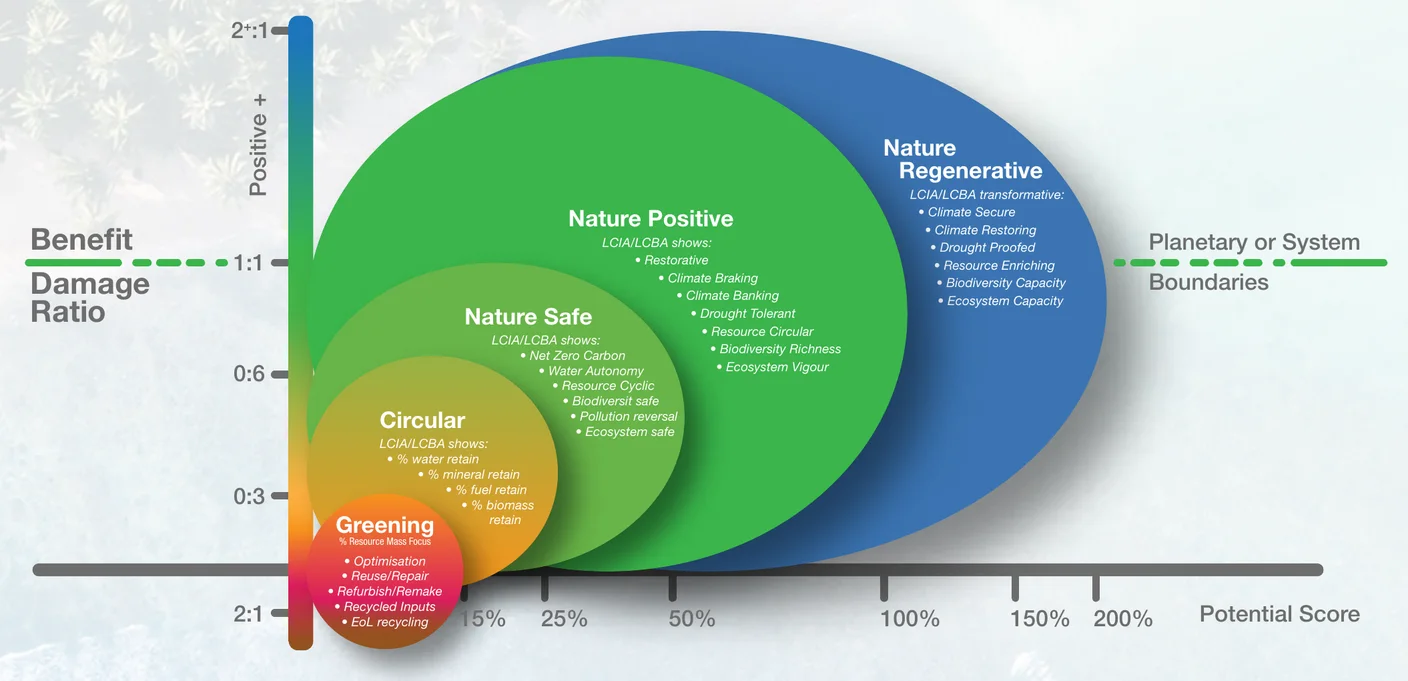
Within Global GreenTag's Nature Positive+ Declaration (NP+D) certification framework, LCBA provides the evidence-based methodology needed to identify, verify and communicate nature-positive outcomes throughout product life cycles. NP+D establishes a credible certification pathway for products that demonstrate measurable contributions to nature repair, biodiversity protection, climate resilience, circular resource use and positive human wellness and ecological outcomes. LCBA provides the framework of measures, metrics and quantitative results; NP+D provides the independent certification, verification and market recognition.
From compliance on loss to news about gains
Together, LCBA and NP+D create a powerful market mechanism to engage manufacturers in nature repair. Industry sectors gain a transparent, robust method for demonstrating not only reduced impacts but also verified environmental and societal value creation. Specifiers, asset owners, investors and procurement teams gain confidence that certified products have been assessed against both environmental burdens and positive contributions. This supports more informed decisions aligned with regenerative development, circular economy objectives and nature-positive procurement strategies.
Most importantly, the combined approach changes the conversation from compliance on loss to news about gains. By rewarding measurable gain, LCBA-enabled NP+D certification encourages manufacturers to innovate for biodiversity enhancement and ecosystem restoration. The result is a practical pathway for industry participation in nature repair — transforming certification from a reporting exercise into a catalyst for continuous improvement and investment in regenerative product design.
In an economy increasingly focused on net-positive outcomes, LCBA and GreenTag NP+D together provide the missing link between measurement, certification and market transformation — enabling the identification, verification and promotion of products that genuinely contribute to a net-nature-positive future.
Get in touch
Global GreenTag International Pty Ltd (GreenTag) is a third-party verified ISO 14024 Type 1 ecolabel program and ISO 17065 Conformity Assessment Body (CAB) that conducts the GreenTagCert™ Global GreenTag certification program, an Australian Competition and Consumer Commission (ACCC) approved Certification Trademark undertaking product-focused environmental, health, ethical and social responsibility assessments of products and their manufacturers.
- The Evah Institute — Delwyn Jones, Program Director, Principal Scientist & Cofounder — delwyn@evah.com.au — +61 (0)4 3856 0212 — evah.institute
- Global GreenTag International — Dr Nana Bortsie-Aryee, Program Director — programdirector@globalgreentag.com — +61 (0)4 8159 6957
- Global GreenTag International — David Baggs LFRAIA, CEO, Technical Director & Cofounder — ceo@globalgreentag.com — +61 (0)4 1823 2827 — globalgreentag.com